

Simply put, condensation occurs when warm, humid air inside the tent comes into contact with a cold tent fabric surface, causing water vapor to turn into droplets.
In winter, heaters, guests’ breathing, boiling water, and cooking can generate a large amount of water vapor inside the tent. Outside the fabric is cold air, which keeps the inner surface relatively cold. When warm, humid air meets the cold surface, condensation forms—just like water droplets appearing on the outside of an ice-cold soda can in summer.
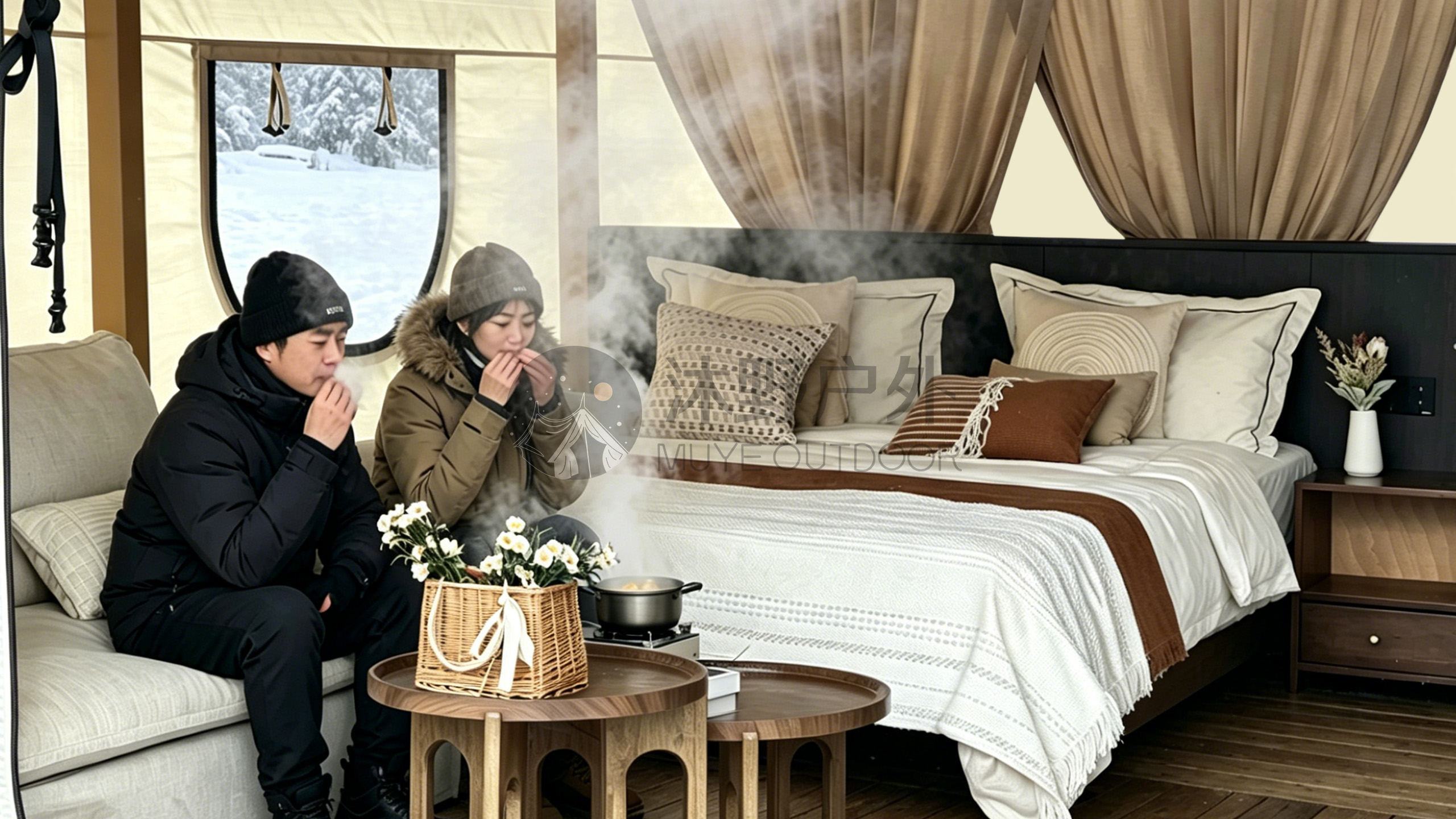
This is not the tent “leaking.” It is a natural physical phenomenon. However, good design can significantly reduce or even prevent condensation.
First Layer: Special Coating on the Inner Surface of the Membrane
Muye’s PVDF and PVC membrane materials feature a hydrophilic or anti-condensation coating on the inner surface. Its purpose is to prevent water vapor from forming large droplets on the fabric. Instead, the moisture spreads into an extremely thin, uniform water film that flows along the membrane toward the edges and drains away. It is barely visible and does not drip.
Second Layer: Double-Layer Structure + Air Gap
Muye’s insulated tents, including cold-climate models with XPS insulated walls, use a double-layer structure: an outer PVDF membrane, an inner waterproof wall fabric, and a 5–8 cm air gap between them. This air layer acts as a thermal break, preventing indoor heat from transferring directly to the outer membrane. As a result, the outer membrane does not become excessively cold, greatly reducing condensation. The air gap also allows ventilation and moisture removal.
Third Layer: Roof Ventilation Skylight
Humid air is lighter than dry air, so it naturally rises. Muye tents feature openable ventilation skylights at the top, allowing warm, humid air to escape instead of accumulating on the inner surface of the membrane. In winter, opening the skylight slightly—about 5–10 cm—can effectively remove moisture without causing excessive heat loss.
Fourth Layer: Bottom Ventilation Openings
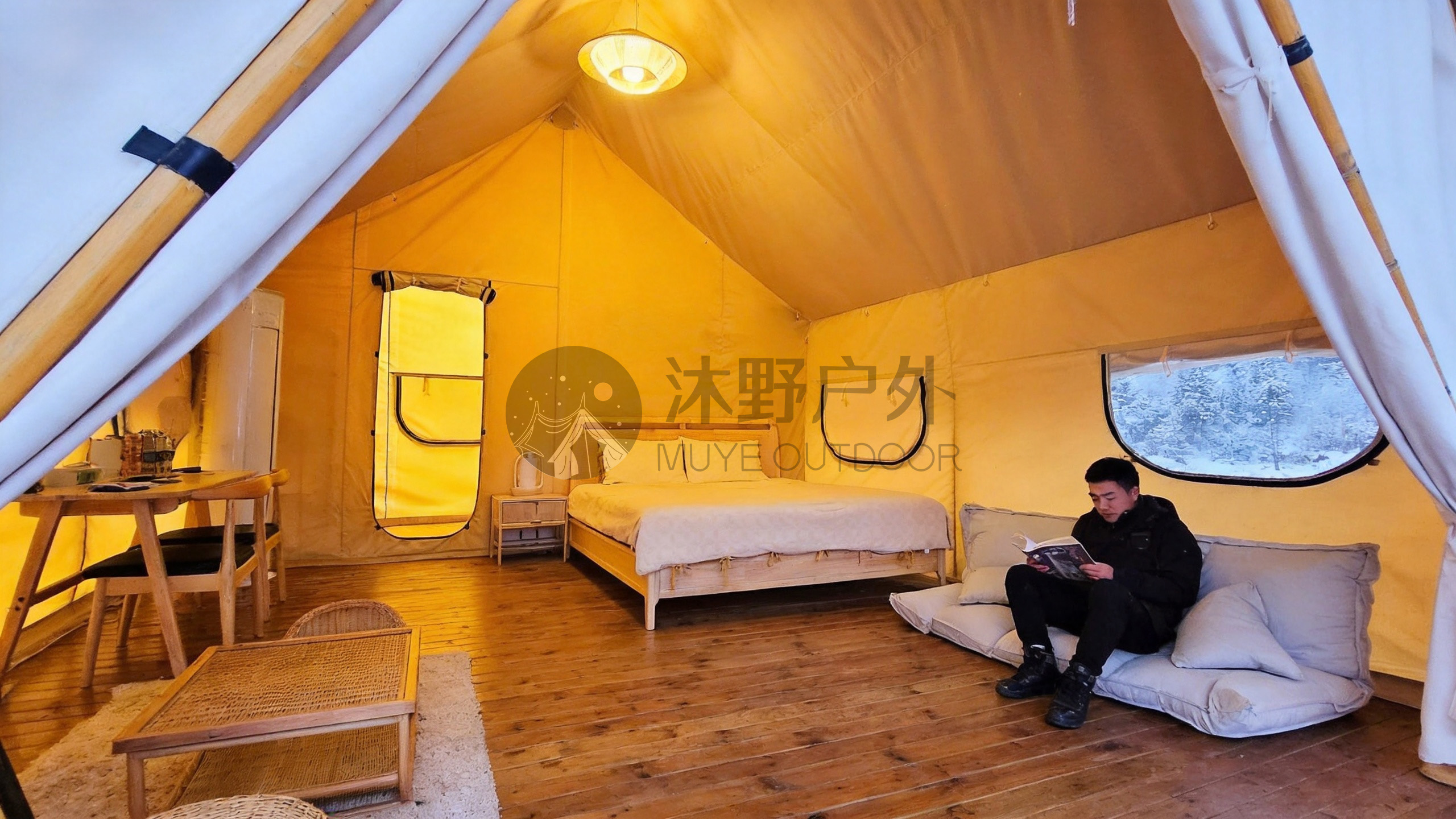
Strip-style ventilation openings are provided along the bottom of the tent and can be closed when necessary. Fresh air enters from the bottom and pushes humid air upward, creating natural air circulation. This is passive ventilation and requires no electricity.
Do not completely seal the tent: Sealing the tent tightly to keep warm in winter can actually make condensation worse. Open the roof skylight and bottom ventilation openings appropriately.
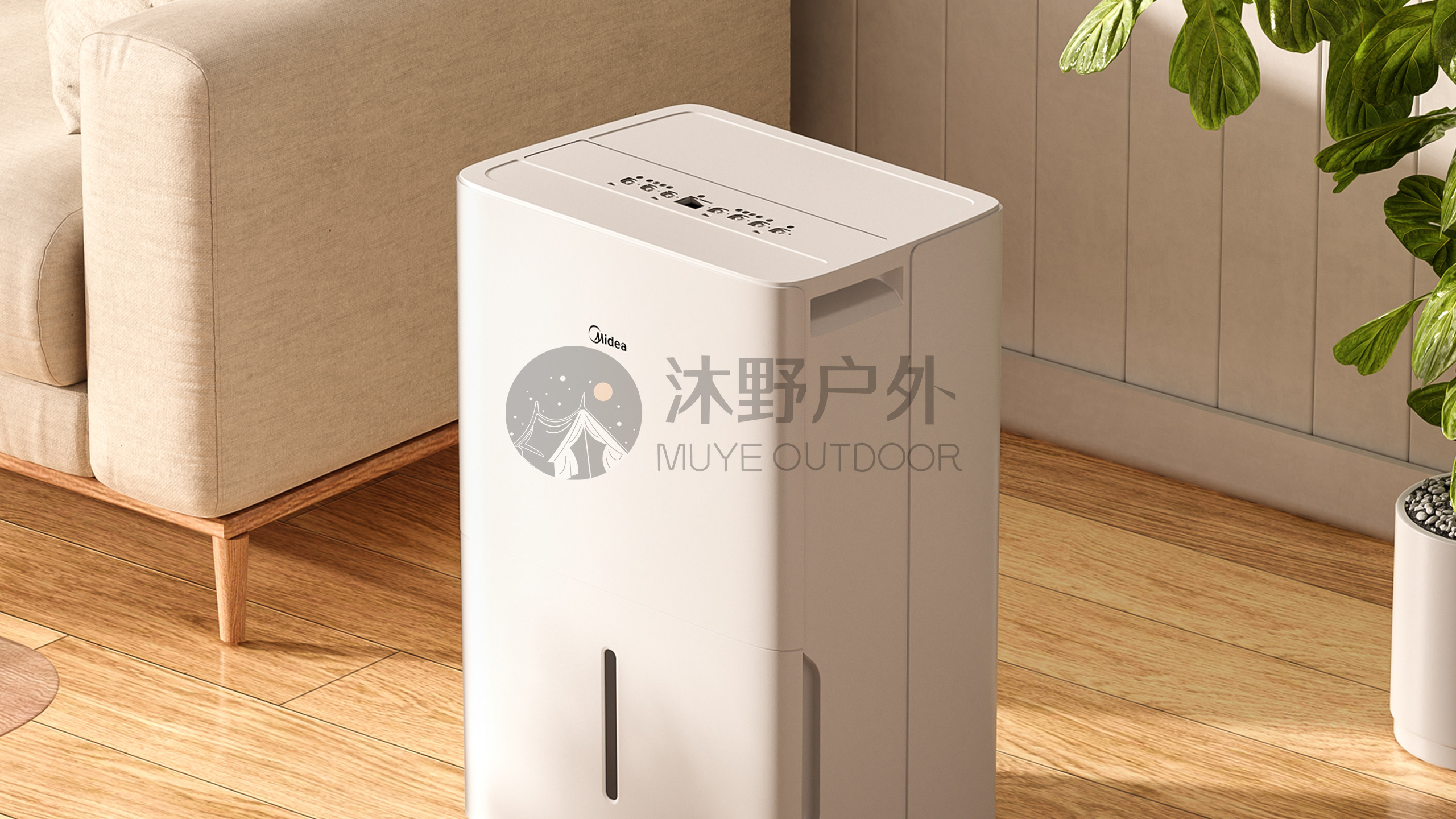
Use a dehumidifier: For large restaurant or event tents, an industrial dehumidifier can provide an immediate improvement.
Avoid drying wet clothes inside the tent: They act like portable “humidifiers.”
Muye’s insulated tents with XPS walls come standard with condensation-prevention features. If you choose a basic single-layer tent, a removable anti-condensation inner liner can also be added for similarly effective results.
In one sentence: Condensation is not an unavoidable “common problem” with tents—it is a design issue. Muye’s condensation-control solutions help keep your tent dry, comfortable, and pleasant even in winter.