Campsite Layout & Traffic Flow: How Tent Placement Shapes Guest Comfort and Safety
Muye does not provide full-service campsite planning, but we are happy to share some practical experience from real projects to help you avoid common mistakes.
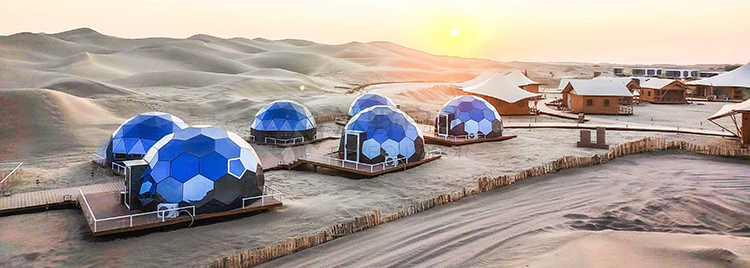
1. Tent Orientation: Maximize the View or Avoid the Afternoon Sun?
Principle 1: Face the Main Entrance Toward the Best View
If your campsite has a lake, mountain, ocean, sunrise or sunset view, the main entrance and large windows of the tent should ideally face the scenic direction.
Imagine your guests opening the curtains in the morning and immediately seeing the landscape outside. That's the kind of experience that makes the room feel worth the price.
Principle 2: Avoid Excessive Afternoon Sun
The strong western sun between approximately 2:00 and 5:00 p.m. in summer can make a tent extremely hot.
If the site allows, try to arrange tents along a north-south orientation to reduce direct western exposure. Avoid placing the main entrance or large windows directly toward the west.
If a west-facing layout is unavoidable, consider adding an external shade structure or planting mature trees to provide additional protection.
Muye's Tip:
Mark the site's orientation and the sun's seasonal path on your planning drawing before deciding the direction of each tent.
Don't rely on intuition alone.
2. Tent Spacing: Balance Privacy and Safety
Privacy Distance:
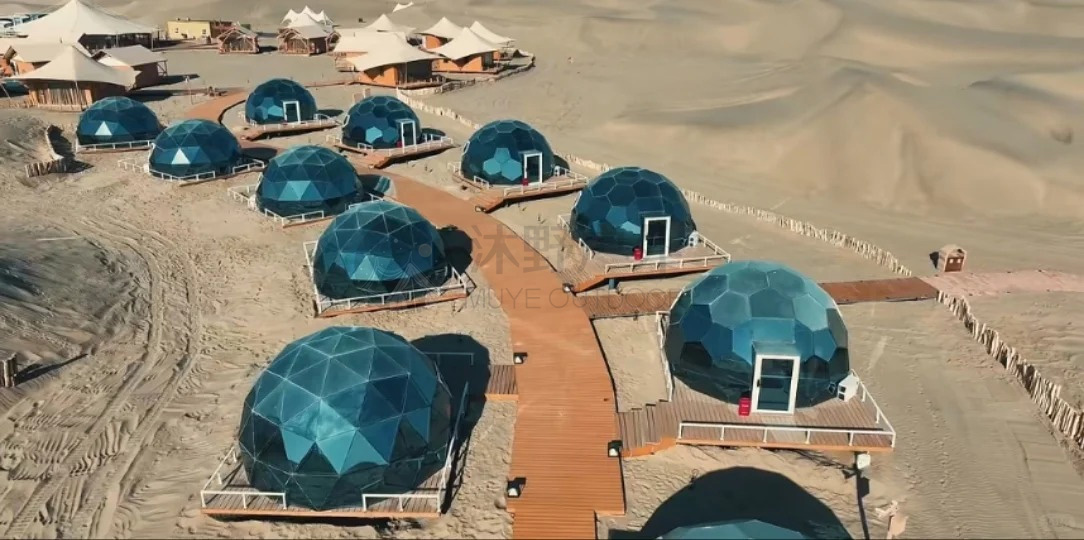
As a general planning reference, we recommend leaving at least 6 meters between two tents.
If you plant a row of shrubs or bamboo between the tents, the spacing may be reduced to around 4 meters, depending on the site and local requirements.
If tents are placed too close together, guests may be able to hear conversations from neighboring units, which can significantly affect privacy.
Fire Safety Distance:
Depending on local fire-safety regulations and campsite requirements, adequate emergency access should be maintained between tent areas. As a general reference, a 4-meter-wide fire access route is often recommended to allow emergency vehicles to pass.
Muye's B1 flame-retardant tent materials provide an additional level of fire safety, but proper site planning and emergency access are still essential.
Wind Considerations:
Placing tents too closely together can create a channeling effect, where wind accelerates as it passes through narrow gaps.
Leaving sufficient open space allows airflow to pass more evenly and can help reduce localized wind pressure.
3. Traffic Flow: How Guests Move and How Services Are Delivered
A well-designed campsite should consider three different circulation routes.
Guest Flow:
Parking area → Reception → Tent → Restaurant / Restrooms / Activity Areas
This route should be short, straightforward and clearly marked.
You don't want guests dragging suitcases over gravel paths and taking unnecessary detours just to reach their tents.
Service Flow:
Housekeeping, food delivery and maintenance staff should ideally use routes that are separate from guest pathways to minimize disturbances.
One practical solution is to create a discreet service path behind the tents.
Emergency Flow:
Each area should have at least two possible evacuation directions leading toward an open and safe area.
Main access roads in the tent area should never be blocked by landscaping, decorative structures or other obstacles.
Muye's Experience:
Different types of pathway lighting or ground materials can be used to visually distinguish different routes.
For example:
-
Red lighting: Emergency exit direction
-
Warm yellow lighting: Guest pathways
-
Blue lighting: Service routes
This allows guests to navigate the campsite intuitively without constantly asking for directions.
4. Where Should the Public Facilities Go?
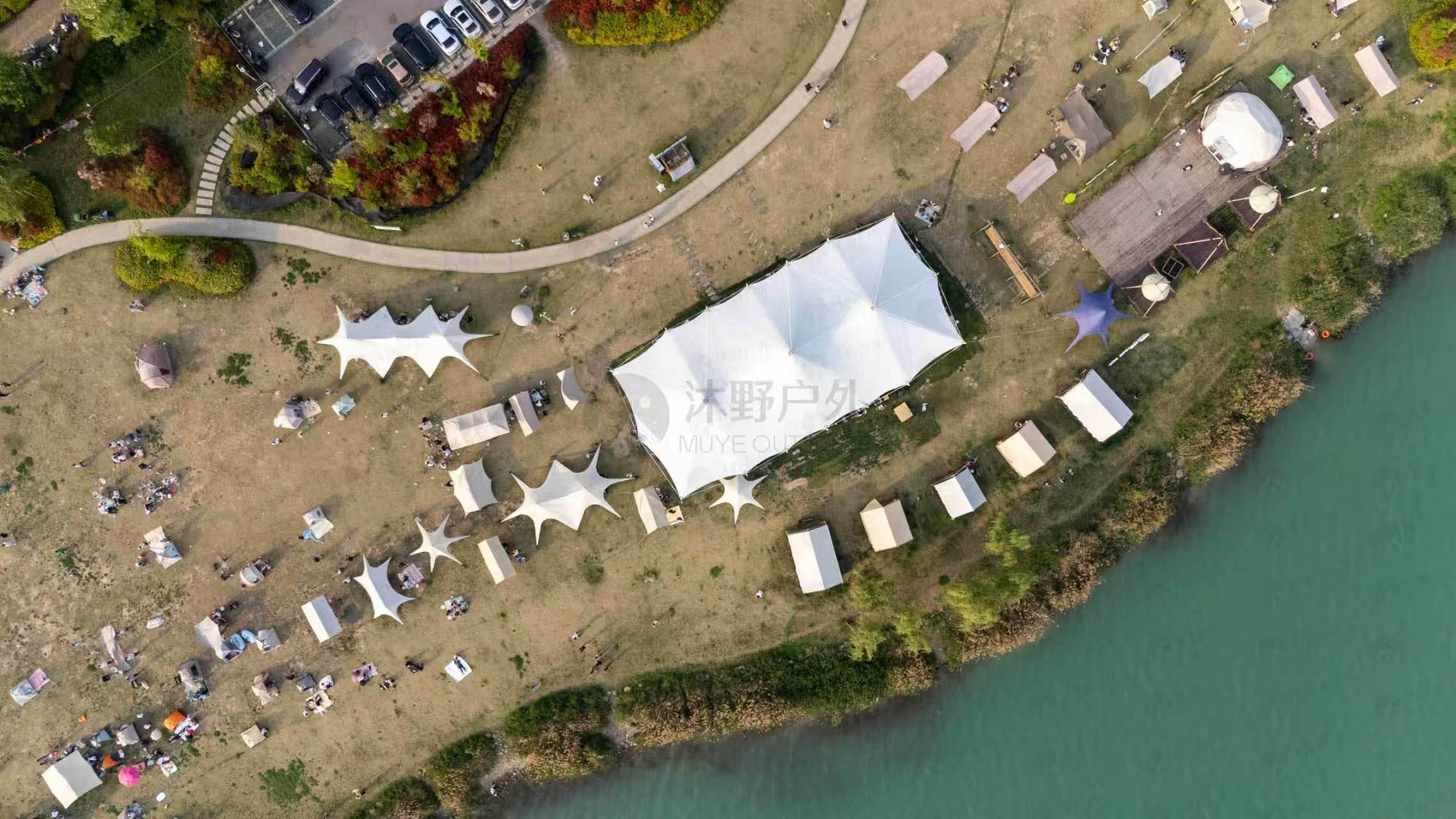
Reception / Service Center:
Ideally located between the parking area and the tent accommodation area, so guests can easily see it as soon as they arrive.
Public Restrooms:
The furthest tent should ideally be within approximately 3 minutes' walking distance of the restrooms. Adequate lighting should also be provided for nighttime access.
BBQ / Campfire Area:
Place these facilities downwind of the accommodation area whenever possible and keep them away from guest tents to reduce smoke and odors drifting toward sleeping areas.
Children's Activity Area:
Choose an open location with good visibility, allowing parents to keep an eye on their children from nearby tents or public areas.